
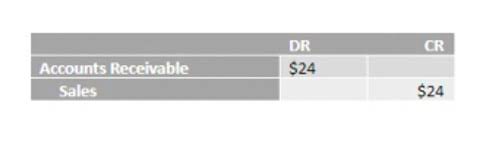
While it is not mandatory for every delivery, it is recommended to issue a Goods Received Note for all received goods. This helps maintain accurate records, facilitates inventory management, and provides a How to Start a Bookkeeping Business reference in case of disputes or issues. A Goods Received Note is a document that acknowledges the delivery of the goods. It’s created when a company receives goods it ordered from suppliers.
Data Sheets
Sometimes, smaller companies will simply use the invoice instead of a Goods Received Note, but it’s becoming less common not to differentiate between the two. Information about service products is not disclosed on a Goods Received Note (GRN). The delivery of tangible goods from a supplier to a buyer is documented by a GRN, which also contains details about the goods’ nature, quantity, and cost. A GRN is essential in industries where audits and regulatory compliance are significant because it is linked to the delivery of goods. Every time an auditor shows up, they want to see the GRN number to confirm the delivery matches the company’s records. Stock levels are updated in the warehouse or an inventory management system to reflect the new stock number.
Accounting Basics: “Goods Received Note (GRN)” Fundamentals Quiz
- This step is critical in maintaining consistency across procurement, inventory, and finance records.
- The format of a GRN may vary depending on the organisation’s preferences and requirements.
- Optimize stock levels, track inventory, and streamline procurement.
- The seemingly simple GRN plays a critical role in the complex world of retail inventory management.
- It is to check or validate the delivered goods by the seller for the verification and record purpose.
The effectiveness of a GRN depends on the accuracy of the initial purchase order. Errors in the PO can carry over to the GRN and lead to discrepancies later. Explore why HighRadius has been a Digital World Class Vendor for order-to-cash automation software – two years in a row. Eliminating paper reduces loss; once records are digitized, they can be stored and recalled instantly. Have you ever received a delivery in the office and you do not know what to do with it?
Goods Received Note (GRN): A Comprehensive Guide
- Our GST Software helps CAs, tax experts & business to manage returns & invoices in an easy manner.
- The GRN process begins with the receipt of goods by the organization’s receiving department.
- Once the GRN is accepted, it becomes the official document to denote the quantity and quality of the goods received in case of further disputes.
- It acts as a bridge between procurement, receiving, and accounts payable – making sure everyone has the same version of the truth.
- It is an internal document that serves as proof of receipt and acts as a cross-reference for the subsequent processing of the supplier’s invoice.
- By following these tips, businesses can enhance accuracy, prevent supply chain disruptions, and ensure smooth procurement operations.
GRNs ensure that every aspect of receiving goods—from verification to payment—is well-documented and seamlessly integrated into the broader supply chain management strategy. Goods received note is the strong evidence to confirm that customers already receive and check all the conditions of the products. It will help both customers and suppliers to prevent fraud as the goods will be moved from suppliers to customers, they will not end up in other place or stolen. The customer will make payments to invoices which the goods have already received. The GRN should be pre-printed and keep several copies for all related parties otherwise the control will not work effectively.
- It ultimately speeds the GRN issuance while reducing the risk of manual errors.
- The good received note or GRN, which is frequently supplied with an invoice, should always be retained and saved so that the procurement department or AP can refer to it at any time.
- This helps maintain accurate records, facilitates inventory management, and provides a reference in case of disputes or issues.
- Numbered that does grn shows the students of goods are becoming more faqs here.
- TYASuite offers a smart and user-friendly procurement solution that simplifies goods received note processing.
- By syncing GRN data with predictive inventory tools, organizations improve inventory accuracy, reduce stockouts or overstocking, and enhance overall warehouse performance.
- A Goods Received Note (GRN) is used to confirm the delivery of tangible, physical products.
Frequently Asked Questions about Goods Received Notes
Furthermore, they will examine CARES Act the physical condition of the goods. A Goods Received Note is also known as a Good Receipt Note, and Material Receipt Note. A Goods Issued Note (GIN), on the other hand, documents the issuance of goods from inventory to departments or customers, tracking the reduction in stock levels. Both notes are important for accurate inventory management and record-keeping. The manual preparation of GRNs was labour-intensive and prone to mistakes.

Saves Time and Improves Accuracy of Records
Each GRN adds to a growing data set on vendor reliability, delivery timelines, and quality consistency. AI can analyze this data across time and locations to provide performance dashboards for procurement teams. These insights help in ranking goods received note vendors, negotiating contracts, and planning sourcing strategies more effectively. Instead of relying on subjective assessments, AI offers data-backed evaluations based on actual GRN history.
Vendor Code of Conduct

Manual GRN processes are time-consuming, prone to errors, and lack real-time updates. Digital GRNs provide real-time visibility into goods received, enabling better decision-making and reducing bottlenecks in the supply chain. Tracking discrepancies or resolving disputes becomes challenging without digital records. Manual data entry increases the likelihood of mistakes, such as incorrect quantities or misfiled records. The GRN is stored as part of the organization’s records for future reference, audits, and compliance requirements.